

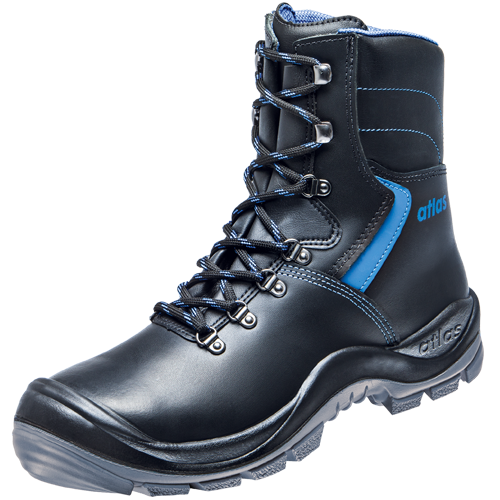
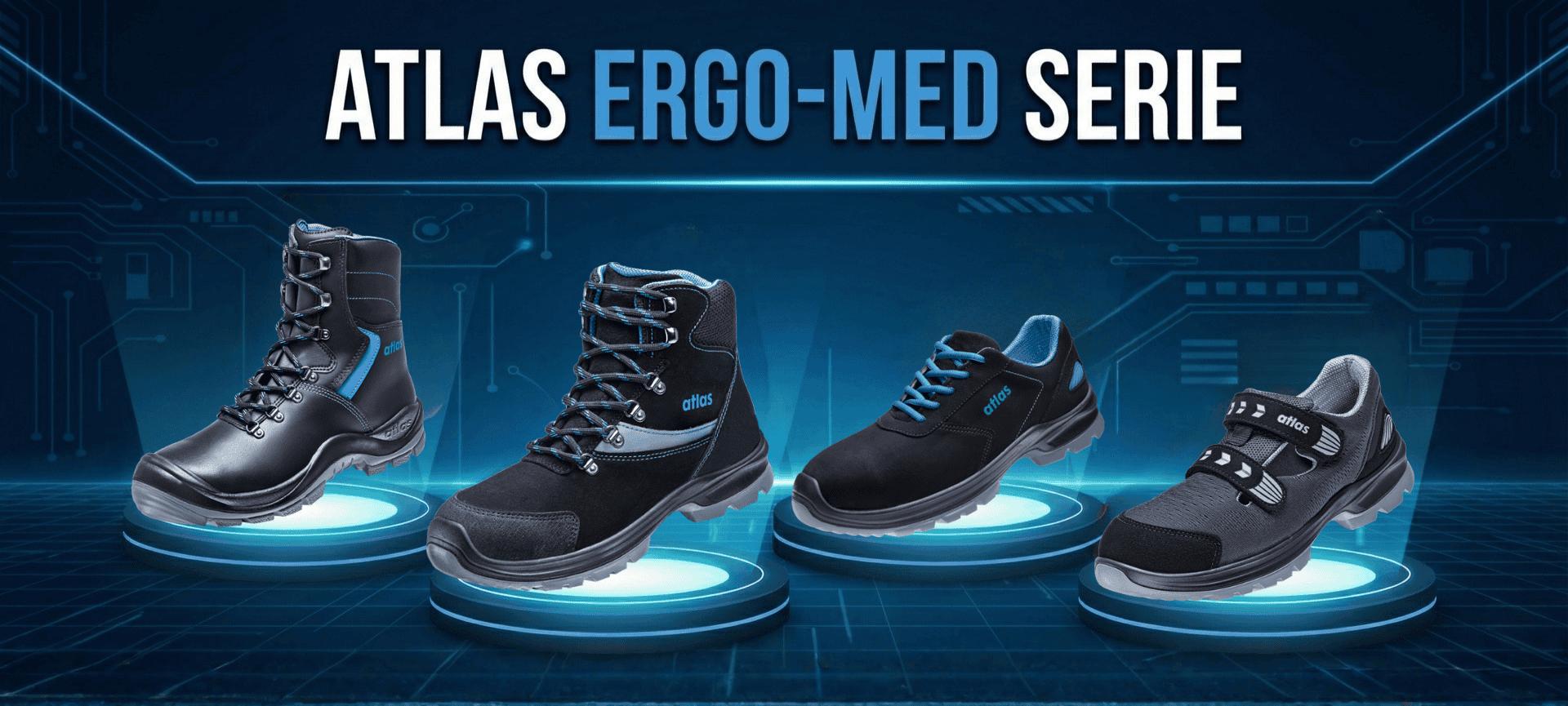
ERGO-MED: Safety footwear for orthopaedic fittings
The special orthopaedic range from ATLAS
If you need to wear safety footwear at work but also have orthopaedic requirements, you’ll be familiar with the challenge: standard shoes often don’t fit properly, pinch or cause pain. This is exactly where ATLAS’s ERGO-MED® range comes in – as a specially developed solution for maximum comfort and personalised foot health in the workplace.
The ERGO-MED range offers you what you’ve been missing in safety footwear until now: certified orthopaedic adjustments in accordance with DGUV Rule 112-191, combined with a well-thought-out multi-width system (widths 10–14) and tried-and-tested ATLAS comfort technologies. With six different models – ranging from lightweight sandals to insulated winter boots – you’ll find the right solution for every application.
All ERGO-MED models are available in standard widths 10 or 12. For wider feet, widths 13 and 14 are available.
Most of our ERGO-MED models bear the ‘blueline’ mark – this means they are approved in accordance with DGUV Rule 112-191 for certified orthopaedic modifications carried out by an orthopaedic shoemaker. This is a key quality feature that distinguishes ERGO-MED from conventional safety footwear.
Whilst many safety shoes can accommodate insoles, only blueline-certified shoes may be adapted by an orthopaedic shoemaker for comprehensive orthopaedic modifications – for example, in cases of complex foot problems such as hallux valgus, heel spurs or pronounced flat-spread feet.
An overview of the blueline models:
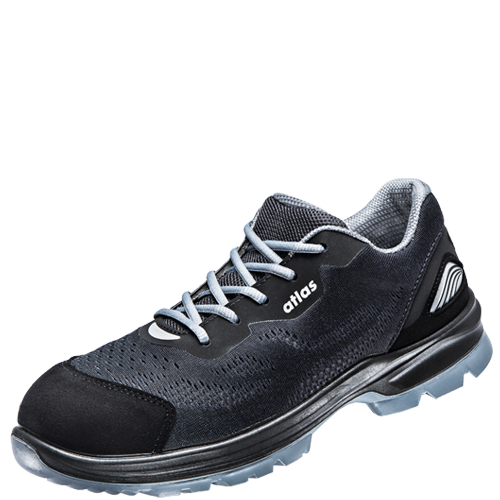
- ERGO-MED 1305 ESD blueline S1P (low-cut shoe, mesh)
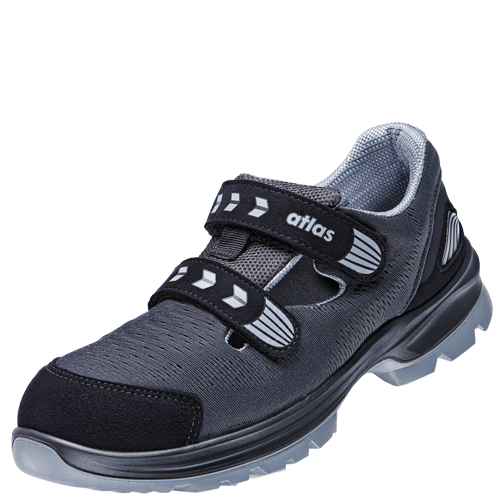
- ERGO-MED 1605 ESD blueline S1P (sandal, mesh)
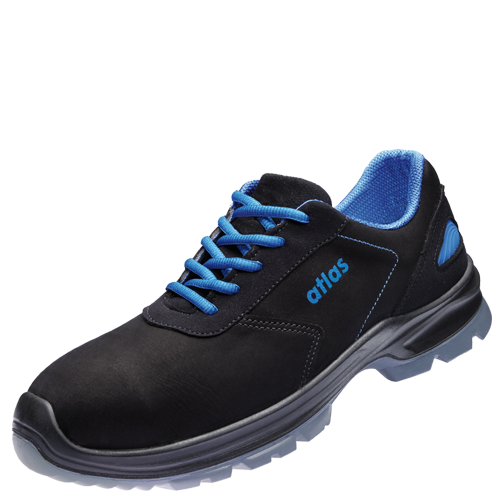
- ERGO-MED 645 XP blueline S3 (low-cut shoe, nubuck leather)
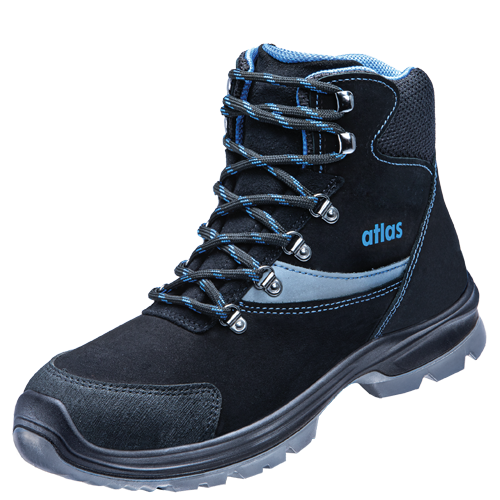
- ERGO-MED 735 XP blueline S3 (ankle-high, nubuck leather)
- ERGO-MED 846 XP ESD blueline S3 (boots, smooth leather)
Although the ERGO-MED 2000 S1 model is not blueline-certified, it is nevertheless suitable for the provision of insoles in accordance with DGUV 112-191 – ideal if you ‘only’ require special insoles but do not need comprehensive orthopaedic modifications to the shoe itself.

How orthopaedic fitting works
- Selection: Choose your ERGO-MED model in the correct size and width
- Prescription: Take the prescription issued by your orthopaedic surgeon to an orthopaedic shoemaker or medical supply shop
- Measurement: Your feet will be precisely measured and analysed on site
- Fitting: The necessary orthopaedic alterations are carried out professionally
- Handover: Personal fitting of the customised shoes and final adjustments
- Cost reimbursement: Depending on the case, the costs may be claimed from the relevant public funding bodies (e.g. health insurance fund, employers’ liability insurance association)
The multi-size system: your perfect fit
Why are different widths so important?
Every foot is different – in length, width and shape. Whilst shoe length (sizes 38, 42, 45 etc.) is usually known, shoe width is often overlooked. Yet it is crucial for comfort and foot health. A shoe that is too narrow causes pressure points and pain, whilst one that is too wide offers no support.
All ERGO-MED models are available in 4 different widths: 10, 12, 13, 14
Our advantage: even the standard width 10 is designed to be wider and better suited to the foot in the ATLAS range than in many of our competitors’ ranges.
To find your perfect shoe size and width, you can simply use our ‘Scan Your Feet’ app or measure your feet manually and look up the measurements in our size guide.

FAQs
Can I wear ERGO-MED even if I don’t have any orthopaedic problems?
Are ERGO-MED shoes heavy?
How do I look after my ERGO-MED shoes?
What size do I need?
How can I find out the width of my Atlas shoes?
The best way to determine the ideal width for your Atlas safety shoes is using the Mondopoint method. This internationally recognised measurement method takes into account not only the length but also the width of the foot to ensure the best possible fit.
To determine the correct width, the circumference of the foot is measured at the widest point of the ball of the foot. Based on these measurements, the appropriate shoe width can then be determined using the Mondopoint system.