

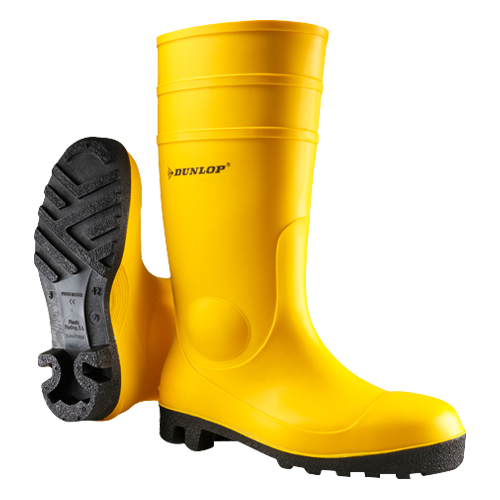

S5 safety footwear – Maximum protection for extreme working conditions
S5 safety footwear offers the highest standard of protection and is the ideal choice for work environments with extreme demands. Whether on building sites, in agriculture or in industry – these shoes are specially designed for environments where maximum safety, durability and comfort are crucial. With innovative technologies and high-quality materials, S5 safety footwear not only ensures the protection of your feet, but also guarantees a long service life and a comfortable fit.
Overview of S5 features:
- Toe cap
- Closed heel area
- Antistatic properties (A)
- Energy absorption in the heel area (E)
- Fuel-resistant sole (FO)
- Puncture-resistant midsole (P)
- Profiled outsole Fully waterproof (as made entirely of rubber or polymer)
S5 safety footwear: protection and comfort combined
Despite their robust construction, S5 safety shoes offer a high level of comfort. Modern materials and ergonomic designs ensure that the shoes remain comfortable even when worn for long periods. The combination of protection and comfort is particularly important for preventing fatigue and injuries. What’s more, S5 shoes are designed to look good too. With modern designs and a wide range of styles to choose from, you can be sure that you’ll get through your working day not only safely but also in style.
Conclusion: Class S5 safety footwear – your first choice for maximum safety
If you work in an environment where the highest safety standards are required, S5 safety shoes are the perfect choice. They offer comprehensive protection, are durable and comfortable at the same time. Discover our range of S5 safety footwear now and see for yourself the quality and reliability of our products.
FAQ – S5 safety footwear
How can I find out the width of my Atlas shoes?
The best way to determine the ideal width for your Atlas safety shoes is using the Mondopoint method. This internationally recognised measurement method takes into account not only the length but also the width of the foot to ensure the best possible fit.
To determine the correct width, the circumference of the foot is measured at the widest point of the ball of the foot. Based on these measurements, the appropriate shoe width can then be determined using the Mondopoint system.