
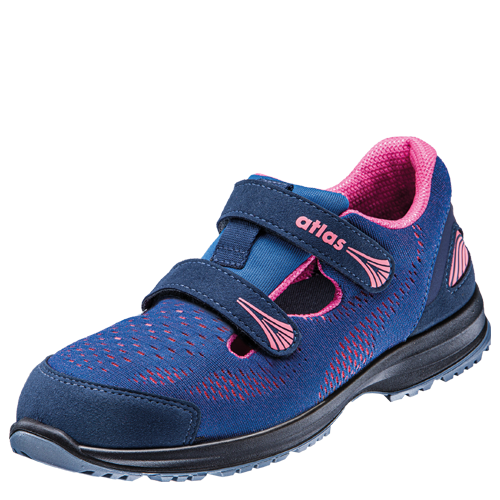


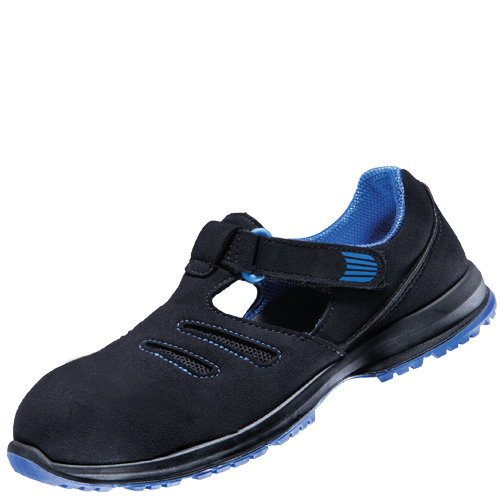
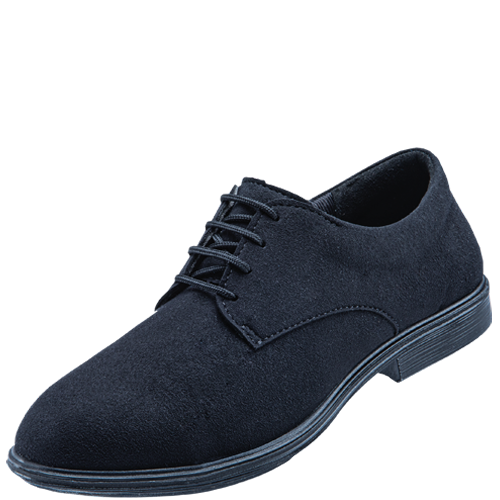
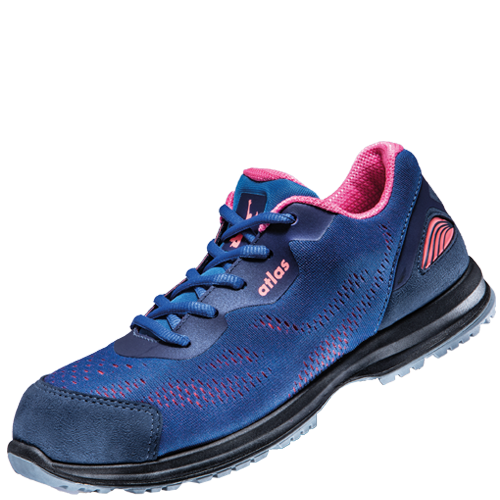


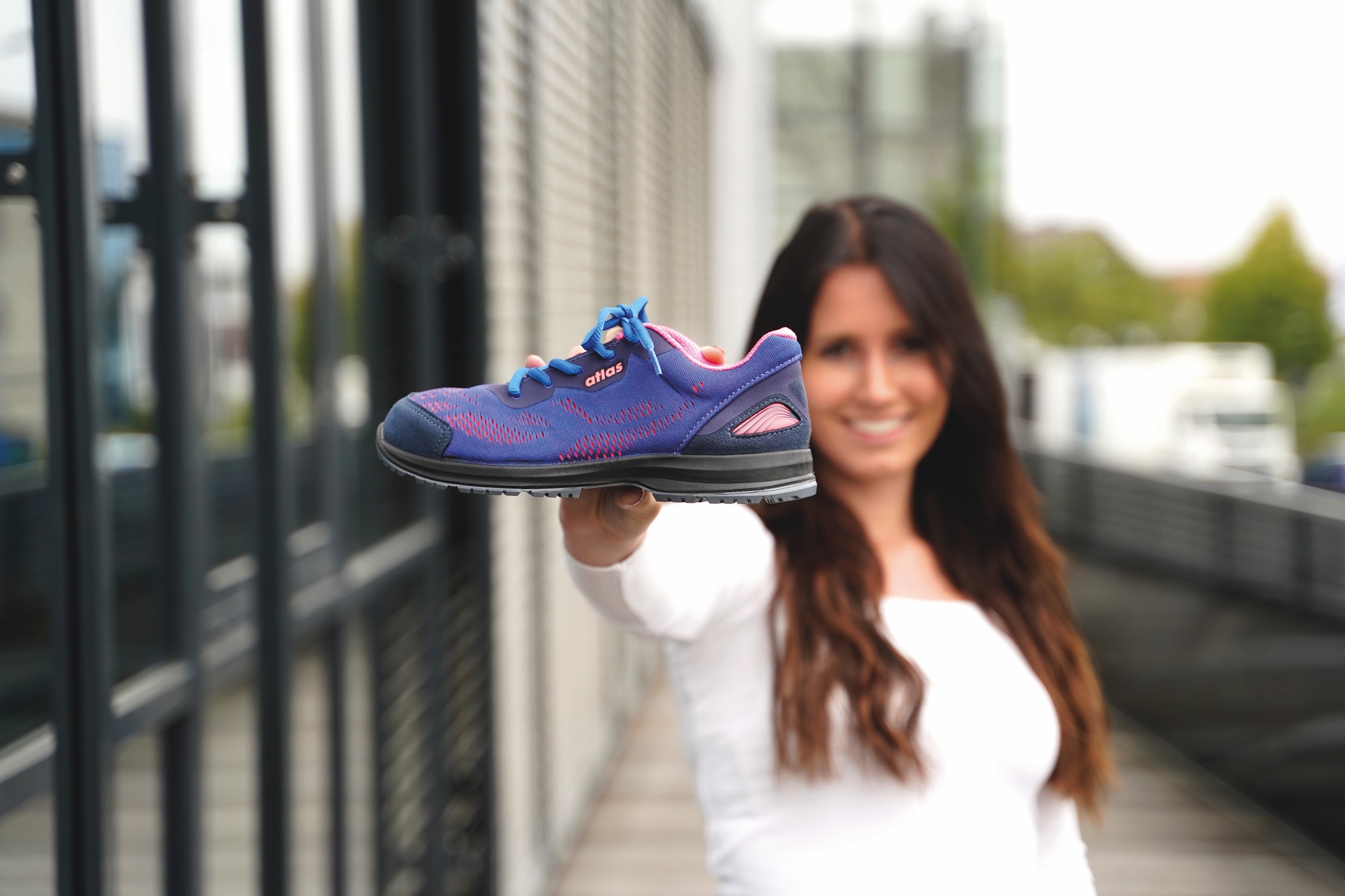
Protection class S1 for women: lightness and breathability for indoor use
Safety footwear compliant with the S1 standard under EN ISO 20345 is far more than ‘just’ work shoes with a steel toe cap. They are highly specialised items of footwear designed for dry indoor environments where the primary hazards are impacts to the toes and static electricity, rather than wet conditions or penetration through the sole.
The key features of our S1 women’s models:
1. The ATLAS clima-stream® concept: At the heart of our S1 shoes is moisture management. Women often tend to sweat less from their feet, but still require constant temperature regulation to prevent their feet from getting too cold or too hot. We use highly functional upper materials (such as mesh fabric or perforated microfibre) combined with a breathable inner lining. The clima-stream® system utilises the pumping action of walking to draw warm, moist air out of the shoe and allow fresh air to circulate. This ensures a consistently comfortable foot environment, even during 8-hour shifts in a warm warehouse.
2. Lightness and flexibility: As there is no need to incorporate a heavy, waterproof membrane or a puncture-resistant sole, S1 shoes are extremely lightweight. Our sole designs are engineered for maximum flexibility to support the foot’s natural rolling motion. This significantly reduces the effort required when walking.
3. Antistatic and energy absorption: As required by the standard, the shoes are antistatic and feature a defined level of energy absorption in the heel area. At ATLAS, we go beyond the standard: our cushioning systems (such as MPU® sole technology) noticeably relieve pressure on the spine and joints with every step on hard industrial flooring.
Experience carefree working: Discover our ATLAS women’s S1-class safety shoes now.
Biomechanical support provided by MPU® Light sole technology
As S1 shoes do not require a puncture-resistant midsole, we can focus the sole construction entirely on dynamics and cushioning. To achieve this, we use our proprietary Multifunctional Polyurethane (MPU®) in a special ‘Light’ formulation.

Energy absorption (E):
The standard requires a minimum energy absorption of 20 joules in the heel area. Our ATLAS MPU® soles significantly exceed this figure. The ‘shock’ experienced when stepping onto a hard indoor floor is absorbed, which has been proven to relieve pressure on the chain of joints from the heel, through the knee, to the lumbar spine.
Rebound effect:
The material not only absorbs shock, it also has a high level of rebound. Some of the energy generated when the foot strikes the ground is returned as the foot pushes off, making walking less tiring – a crucial factor given that staff in the logistics sector often walk distances of over 10 km per shift.
Maximum slip resistance (SRC):
It goes without saying that our S1 soles meet the highest slip-resistance requirements (SRC = tested on ceramic tiles with cleaning agent + steel floors with glycerine) to provide a secure grip on slippery industrial floors.
Weight-optimised toe protection (alu-tec®):
To further reduce the overall weight of the shoe and improve balance, we use our alu-tec® aluminium toe caps instead of steel in many modern S1 women’s models. These offer the same level of protection (200 joules of impact resistance / 15 kN of compressive strength) whilst being approximately 40 per cent lighter than steel. Furthermore, aluminium is non-magnetic and more thermally neutral (fewer cold bridges in winter).
Guaranteed antistatic properties (A):
An often underestimated but mandatory feature of Class S1 is antistatic protection. The footwear must have an electrical volume resistance of between 10⁵ and 10⁹ ohms. This prevents dangerous static build-up in the body and the risk of a sudden discharge (sparking), which is essential particularly when handling sensitive electronic components (ESD protection; many of our S1 models are also ESD-compliant) or flammable substances.