


S3 safety shoes for women: maximum protection meets a perfect fit
Safety in the workplace is not a matter of compromise – especially when it comes to your footwear. For women working in industry, the trades or logistics, S3-rated safety footwear is the gold standard for comprehensive protection. Here at ATLAS, we know that women’s feet have specific requirements when it comes to ergonomics and comfort. That’s why we offer S3 work shoes that not only meet all standards with ease but are also so comfortable that you’ll hardly notice you’re wearing them, even after a long day at work.
What does safety class S3 mean for women’s shoes?
Safety class S3 is the all-rounder among safety standards. Whilst classes S1 and S1P are primarily designed for dry indoor environments, S3 footwear has been developed for demanding environments. Women’s S3 safety footwear combines the following essential features:
1. Toe cap: Reliable protection against impacts and pressure (up to 200 joules).
2. Puncture resistance: A robust midsole (made of steel or textile) prevents sharp objects such as nails or shards of glass from penetrating the shoe.
3. Water-repellent upper: The material is designed to be resistant to water penetration for at least 60 minutes.
4. Treaded outsole: Ensures a firm grip on slippery, oily or uneven surfaces.
5. Anti-static & energy absorption: Protects your joints through targeted cushioning in the heel area.
Experience safety at work: Discover our ATLAS women’s S3-class safety shoes now.
Why should you opt for special S3 models designed for women?
For a long time, it was common for women simply to wear smaller men’s sizes. However, the anatomy of the female foot differs significantly: women’s feet are usually narrower, particularly around the heel, and have a different instep height. Our S3 models for women are therefore based on special women’s lasts. The result for you: a significantly improved fit that effectively prevents blisters and provides stability for your feet throughout the day. Whether you prefer a sporty safety shoe with a trainer-style look or a sturdy boot – with us, safety and style go hand in hand.

Areas of use: When is the S3 the right choice for women?
S3 shoes are your ideal choice whenever your daily work takes you outdoors or you have to contend with damp conditions and rough terrain. Typical areas of use include:
Construction & Trades:
Protection against falling loads and hazards on the ground.
Gardening and landscaping:
Keep your feet dry thanks to water-repellent uppers, even in the rain or on wet grass.
Industry & Logistics:
Wherever puncture resistance and maximum slip resistance (SRC) are top priorities.
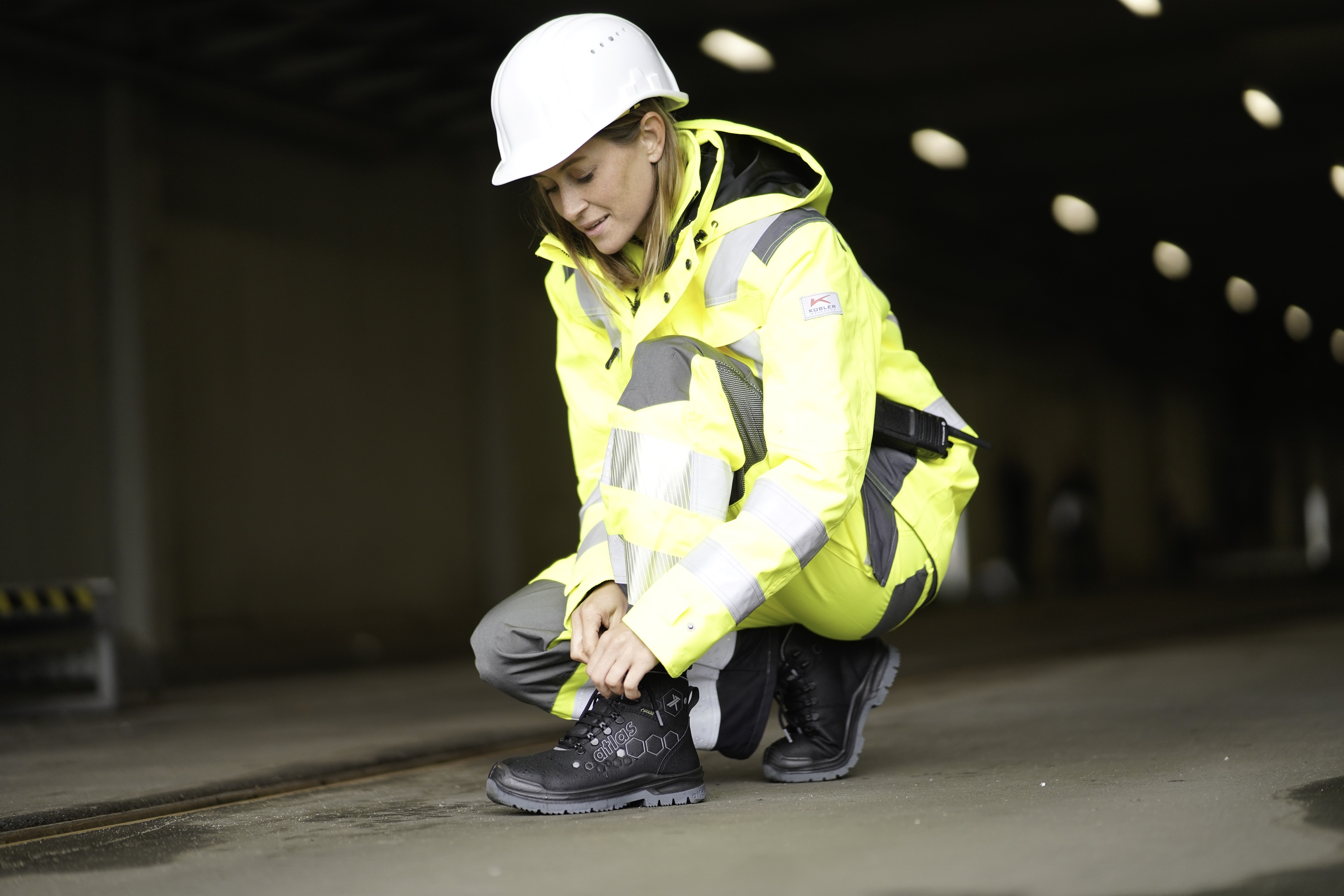
Tips for choosing: How to find your perfect pair
When browsing our range, don’t just focus on the design. To ensure your shoes are ideal for your everyday working life, you should consider the following aspects:
Breathability: Do you need a high-tech membrane for active climate control inside the shoe?
Weight: Do you prefer a lightweight plastic toe cap to a traditional steel toe cap to save energy? V
Fastening system: Do you prefer classic lacing or the innovative, quick-release BOA® system?