

Buying safety boots: The ultimate guide to maximum protection in extreme conditions
A high-quality safety boot offers more than just enhanced ankle protection – it is your reliable partner in extreme working conditions, from freezing cold to scorching heat. Whilst low-cut shoes are sufficient for many jobs, safety boots are indispensable when additional ankle protection, weather protection or specific requirements such as welding protection are needed. In this comprehensive buying guide, you’ll learn all about materials, technologies, protection classes and the tried-and-tested ranges in the ATLAS range – from the GTX range with GORE-TEX to the ANATOMIC BAU for tough construction site use. We’ll show you what really matters when making your choice: from the right shaft height and special features such as the BOA® Fit System right through to industry-specific requirements. Discover the differences between summer and winter boots, the benefits of modern sole technologies and innovative features such as ESD protection or orthopaedic insoles.
The anatomy of a safety boot: every detail counts

Shaft height and ankle protection
The shaft height is the defining feature of a boot and offers key benefits:
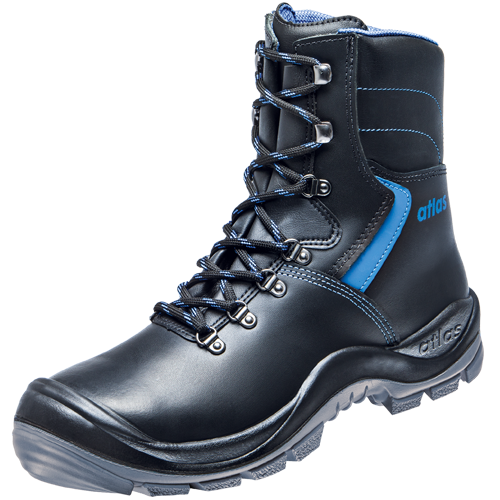
Standard safety boots (16–20 cm shaft height):
- Optimal ankle protection against twisting
- Protection against foreign objects entering the boot
- Stabilisation of the ankle joint on uneven terrain
- ATLAS recommendation: ANATOMIC BAU 825 XP for standard construction site use
High-cut boots (20–25 cm shaft height):
- Maximum protection for forestry work
- Additional calf protection
- Ideal for deep terrain or snow
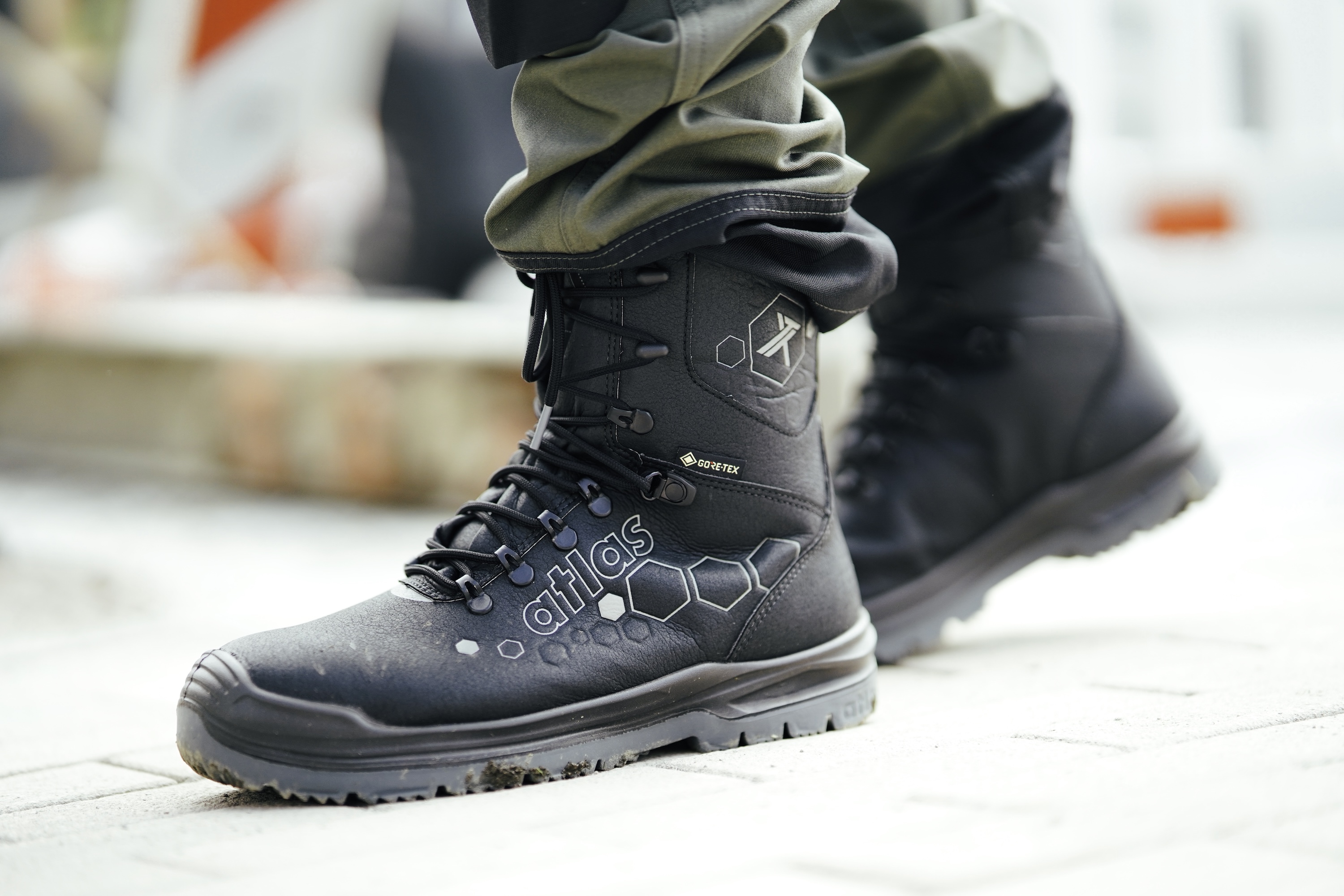
- ATLAS recommendation: GTX 935 XP S3 with deep lug tread
Fastening systems: from traditional to high-tech
Lacing with D-ring eyelets and lacing hooks:
- A tried-and-tested system with individual zone lacing
- Sturdy metal eyelets for extreme stress
- Separate adjustment of forefoot and upper
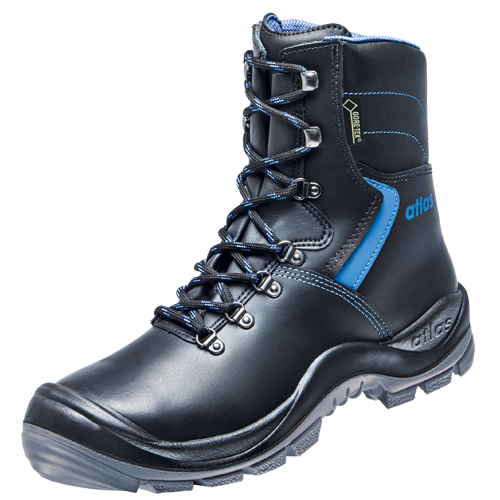
- ATLAS classics: GTX 935 XP S3, ANATOMIC BAU 845 XP
Innovative technologies in detail
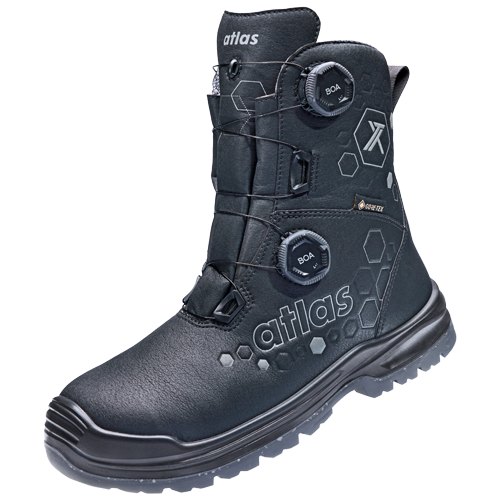
BOA® Fit System – The revolution in lacing
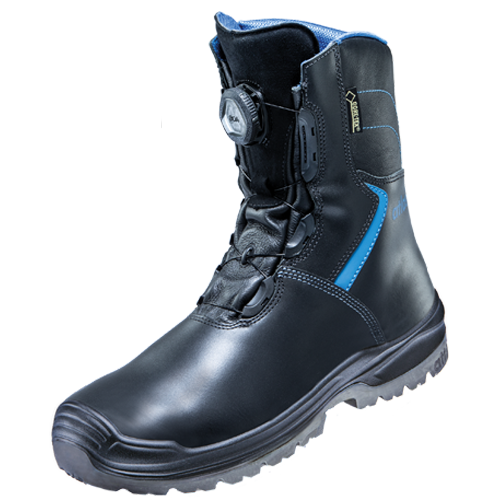
The BOA® Fit System replaces traditional laces with an innovative twist-lock system:
Advantages of the BOA® system:
- Adjustment in a matter of seconds: micro-adjustable dial for a perfect fit
- Even pressure distribution: No pressure points caused by laces
- One-handed operation: Easy to use even whilst wearing gloves
- Long-lasting durability: Stainless steel lacing system with a guarantee
- No risk of tripping: No loose laces
ATLAS BOA® models:
- GTX 983 XP BOA S3 – Premium with GORE-TEX® and EXTRAGUARD®
- XT 1050 BOA GTX – The robust all-rounder with a steel toe cap

GORE-TEX – The gold standard in weather protection
GORE-TEX is more than just waterproof – it’s a complete climate system:
GORE-TEX Performance:
- 100% waterproof with a water column of 30,000 mm
- Breathable at 13,000 g/m²/24h
- Permanently windproof
- Used in ATLAS: GTX series for outdoor professionals
GORE-TEX thermal lining:
- Extra insulation for temperatures down to -20°C
- Moisture management even in cold conditions
- Reduced condensation inside the shoe
- Winter Champion: GTX 945 THERMO
EXTRAGUARD® – A new dimension in durability
EXTRAGUARD® is ATLAS’s proprietary material technology:
Technical properties:
- 5 times higher abrasion resistance than standard upper leather
- Heat-resistant up to 300°C contact heat
- Chemical resistance to oils and acids
- Self-cleaning effect thanks to smooth surface
- Top-of-the-range model: XT 1000/1050 GTX with EXTRAGUARD®
Waterproof smooth leather – the robust all-rounder
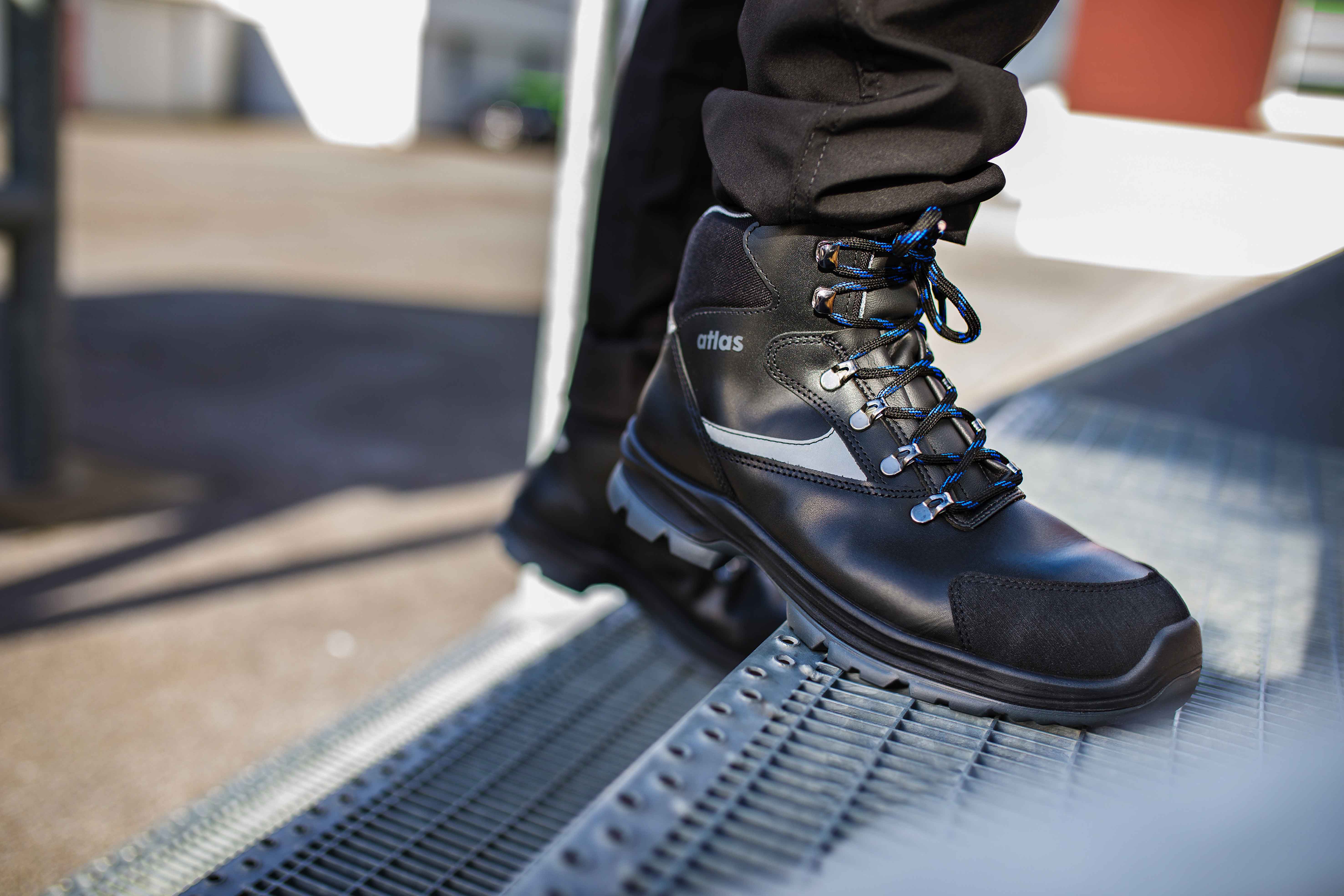
Properties of the 2.2 mm full-grain cowhide leather:
- Water-repellent thanks to a PU coating
- Breathable despite being waterproofed
- Easy to care for and durable
- Retains its shape even when wet
- Used in: the entire ANATOMIC BAU and ERGO-MED ranges
Care and maintenance for maximum service life
Care instructions for specific materials
GORE-TEX boots:
- Clean regularly with lukewarm water
- Use special GORE-TEX care products
- Waterproof every 3–4 weeks
- Air-dry; avoid direct heat
Leather boots:
- Brush off coarse dirt
- Treat the leather with wax or cream
- Reapply waterproofing
- Use shoe trees
Inspection and maintenance
Monthly check:
- Check tread depth (min. 2 mm)
- Check the protective cap for damage
- Seams and bonded joints
- Test the fastening systems
Annual service:
- Professional puncture resistance test
- Antistatic measurement for ESD
- Replacing insoles
- Replacing laces/BOA cables
Sole maintenance
Regular checks:
- Check the tread depth (minimum 3mm)
- Identify any flaking at an early stage
- Remove stones from the tread
- In the event of wear: Replace in good time