

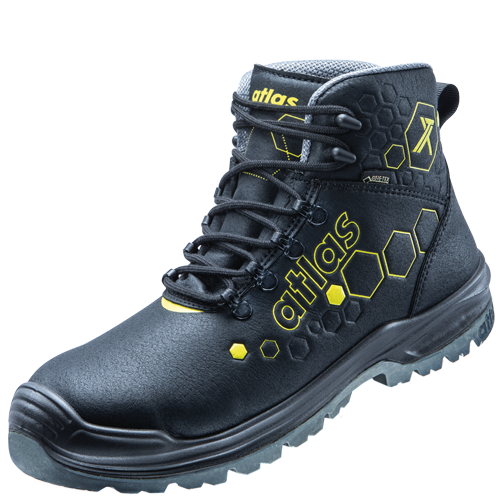
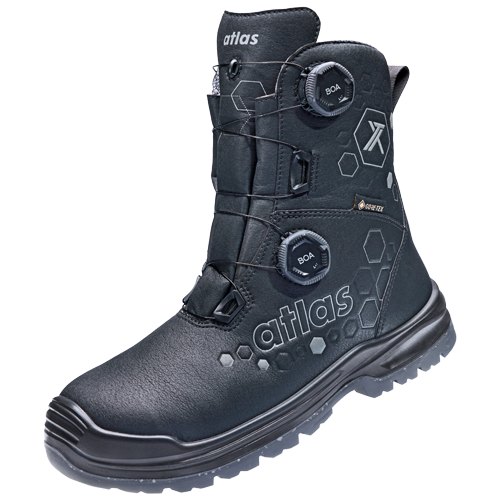


EXTRAGUARD range
ATLAS XT EXTRAGUARD: A revolution in safety standards
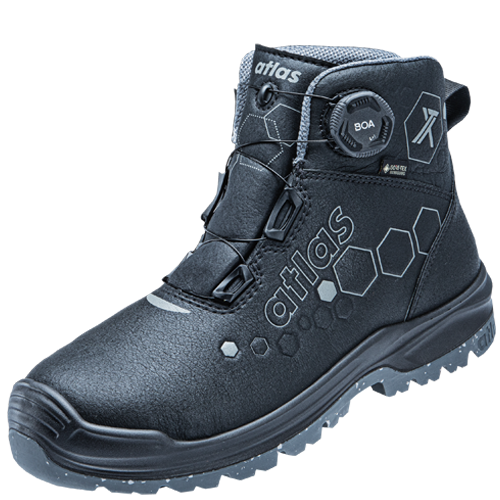
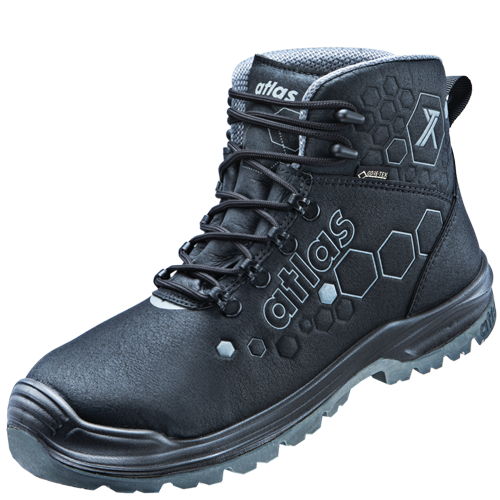
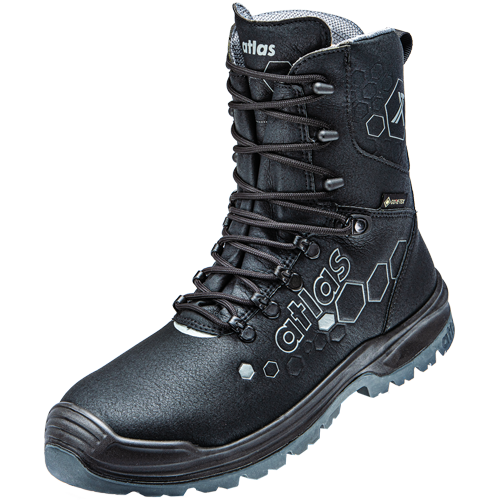
When extreme stresses meet the most demanding requirements, ordinary safety footwear is no longer sufficient. The ATLAS XT EXTRAGUARD® range redefines what modern work footwear is capable of: 40 per cent lighter than traditional leather – a combination previously considered impossible. Developed for professionals in the construction industry, the fire service, emergency medical services, landscaping and heavy-duty assembly work, the EXTRAGUARD range combines groundbreaking material technology with uncompromising functionality. Six well-designed models – from agile low-top shoes to protective boots – cover every scenario without you having to compromise on safety, comfort or durability.

The innovation that’s changing everything
At the heart of the range is the revolutionary EXTRAGUARD upper material technology – a joint development by GORE-TEX and ATLAS. This specially developed high-tech yarn is 40 per cent lighter than traditional leather, whilst being extremely abrasion-resistant and water-repellent.
What does this mean for you in practice? Whilst conventional leather shoes become heavy and lose their shape when exposed to moisture, the EXTRAGUARD material remains permanently lightweight and ready for use even after months of use in the rain, when exposed to chemicals or on wet construction sites. The water-repellent finish cannot be lost – the material itself is designed to be water-repellent.
Easier to care for than ever before
Forget time-consuming leather care involving special creams and hours of polishing. EXTRAGUARD shoes require no special care products. After a hard day’s work, simply give the shoes a quick wipe – and they’re ready for action again. This saves time, money and effort, especially when you’re kitting out entire teams.

The right choice for every application
The EXTRAGUARD XT range offers not just one model, but a carefully curated selection to meet a wide variety of requirements. All models share the same premium features, but differ in design – so you can choose exactly the right shoe for your job.
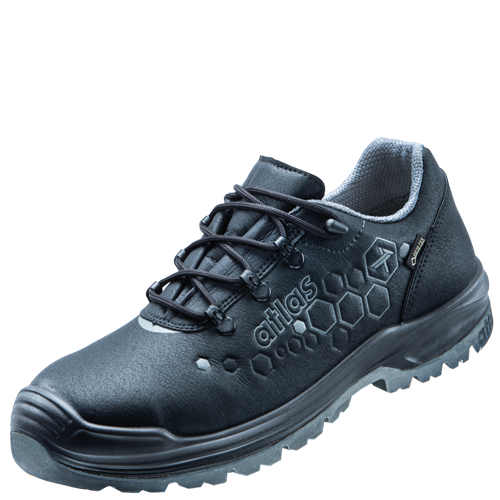
Low-cut boot: Maximum freedom of movement
The XT 100 is the lightest model in the range, weighing just 1.54 kg per pair. As the only low-cut boot, it offers maximum freedom of movement and is ideal for indoor use where frequent changes of footwear are required, as well as for light to medium-duty tasks. This low-cut shoe proves particularly practical in situations where you need to put them on and take them off quickly, and is perfect for year-round use in drier conditions. A special feature is the XR-MPU sole technology, which ensures optimum energy return and fatigue-free working.


What all EXTRAGUARD models have in common
Whether you choose a low-cut shoe, an ankle-high style or a boot – every EXTRAGUARD model offers you these premium features:
1. 100% GORE-TEX construction
Every model in the range is fitted with the original GORE-TEX membrane. This guarantees 100% waterproofing in accordance with the GORE-TEX standard, whilst the highly breathable material prevents heat build-up even when worn for long periods. The windproof construction ensures added comfort, and the integrated climate control keeps your feet dry – both from the inside by wicking away sweat and from the outside by protecting against moisture.
2. XP metal-free puncture resistance
Whilst traditional safety footwear relies on heavy steel soles, EXTRAGUARD utilises modern XP technology, which meets the S3 standard entirely without the use of metal. The result is greater flexibility and significantly improved comfort whilst maintaining safety. In winter, you benefit from the absence of the cold bridge effect, whilst the lower weight compared to metal-based solutions reduces fatigue. The anti-static feature is already fully integrated.
3. alu-tec aluminium toe cap
The toe cap, made from high-strength aluminium, is significantly lighter than conventional steel toe caps, yet offers the same level of protection in accordance with EN ISO 20345. It noticeably reduces the overall weight of the shoe and provides better thermal insulation without the unpleasant cold bridge effect associated with steel.
4. XR sole technology: grip meets sustainability
ATLAS’s proprietary XR outsole system combines performance with environmental responsibility. It offers maximum grip on a wide variety of surfaces and optimum cushioning for fatigue-free working. The energy absorption in the heel area noticeably relieves strain on your joints. What makes it special: The sole contains at least 20 per cent recycled solids, without compromising on performance. This helps you save on primary raw materials and reduce your carbon footprint.
5. ESD features as standard
All EXTRAGUARD models come with antistatic features as standard and reliably dissipate electrostatic charges. This protects sensitive electronic components whilst you work and enhances safety in potentially explosive atmospheres. What’s more, the ESD features also reduce unpleasant electrostatic discharges in everyday use.
6. Lightweight upper construction
The optimised design reduces weight without compromising safety in any way, thereby minimising fatigue during prolonged wear. It noticeably increases your freedom of movement and significantly improves comfort – this advantage really pays off, especially during long working days.
7. Orthopaedically adaptable in accordance with DGUV 112-191
All EXTRAGUARD models are suitable for custom orthopaedic insoles in accordance with occupational health and safety association guidelines – important for legally compliant procurement and for employees with orthopaedic requirements.
FAQs
Which safety class for which occupation?
S1/S1P: Warehousing, logistics, light assembly
S2: Kitchens, cleaning, food
S3: Construction, skilled trades, outdoor assembly, agriculture
The employers’ liability insurance association provides sector-specific recommendations.
What does ‘S3’ mean in the context of safety boots?
What is the advantage of the BOA® system?
Are GORE-TEX® safety shoes really waterproof?
Can I use orthopaedic insoles in safety boots?
How do I look after safety boots properly?
What does the S3 classification mean for safety boots?
When should I choose a boot rather than a low-top shoe?
How long do safety boots last on average?
Do I really need GORE-TEX shoes for landscaping work?
Highly recommended! In gardening and landscaping, you work every day in the rain, on dew-covered surfaces, wet grass, in puddles and mud. Ordinary ‘water-repellent’ shoes only keep your feet dry for a short time.
GORE-TEX benefits:
- 100% waterproof: Even in continuous rain and when standing in puddles
- Breathable: Sweat can escape, so your feet won’t overheat
- Durable: Still works reliably even after years of use
- Health: Dry feet significantly reduce the risk of colds, blisters and athlete’s foot
Expert tip: The extra cost of GORE-TEX (approx. 30–50 EUR) pays for itself within just a few months thanks to greater comfort and longer durability!