

The best S3 safety shoes: What to look for and our top 7
Knowing which shoes are right for your working environment isn’t just a matter of compliance with regulations, but also of safety and comfort. Even within the S3 standard, there are differences in design, materials and features that determine whether a particular model is suitable for a specific workplace. Whether you work in construction, agriculture or heavy industry – choosing the right S3 safety boot requires an understanding of which models best meet your requirements. In this article, we explain what the S3 safety standard means, which features you should look out for, and present our top 7 S3 models to help you make the right choice.
Our 7 best S3 safety shoes compared
| Our all-rounder | Highest orthopedic comfort | Lightest S3 | Rugged lightweight performer | |||
| ANATOMIC BAU 500 | ERGO-MED 645 XP blueline | RUNNER 95 XP ESD | MAX 550 BOA PRO | GTX 745 GORE-TEX | Extraguard XT 550 BOA GTX | FLASH 6405 BOA XP ESD |
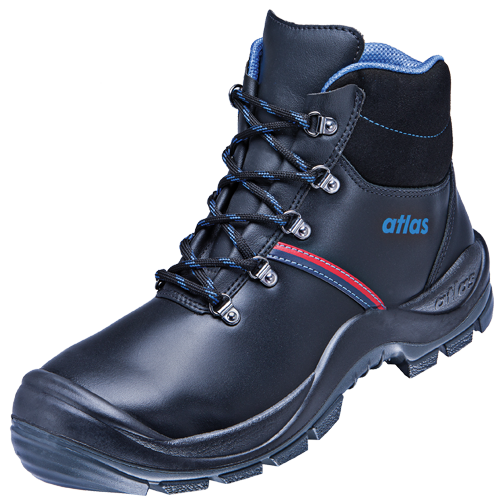 |
.png?ts=1776976454) |
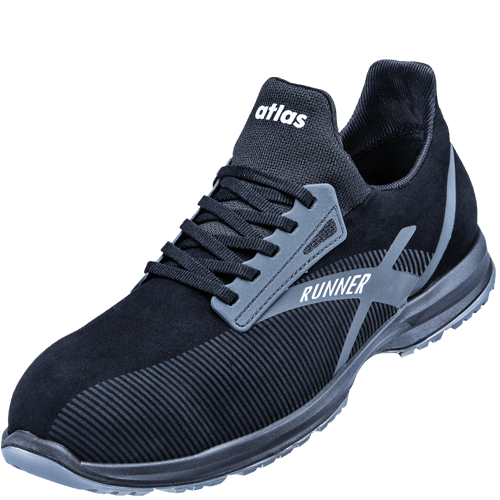 |
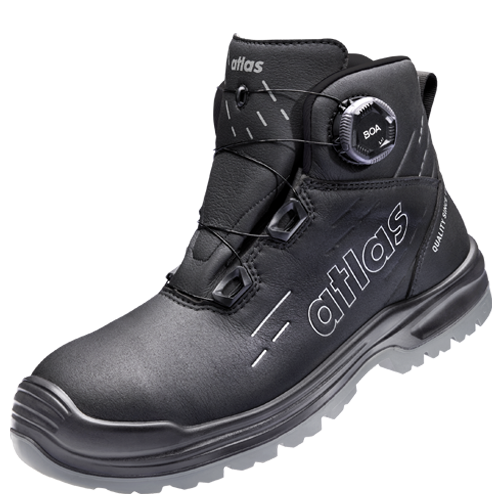 |
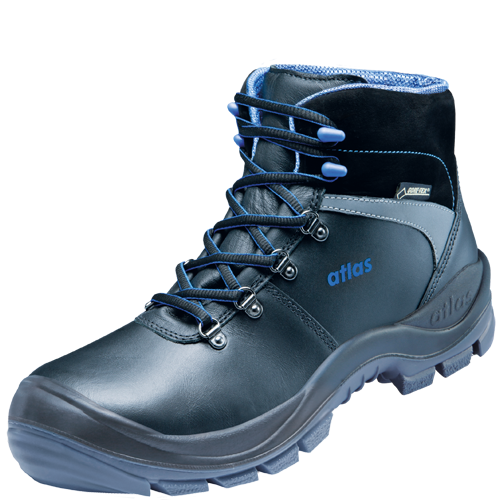 |
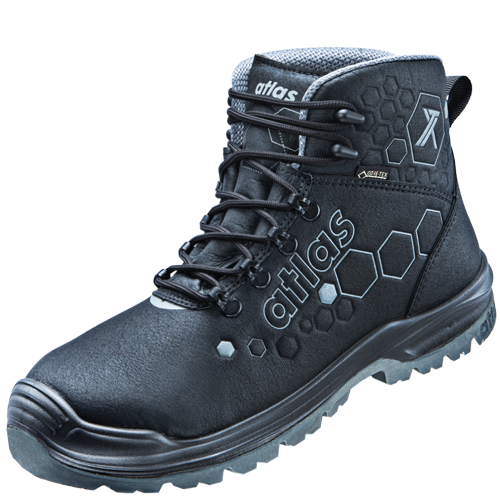 |
.png?ts=1776976472) |
| Boots | Boots | Low shoe | Boots | Boots | Boots | Low shoe |
| Protection class: S3 SRC | Protection class: S3S SR | Protection class: S3 SRC | Protection class: S3S SR | Protection class: S3 SRC | Protection class: S3 SRC | Protection class: S3 SRC |
| Toe cap: Steel | Toe cap: Steel | Toe cap: Steel | Toe cap: Steel | Toe cap: Steel | Toe cap: Alu-tec Aluminium | Toe cap: Steel |
| Upper material: Waterproof smooth leather | Upper material: Soft nubuck leather | Upper material: Hydrophobic microfiber | Upper material: ProTraX | Upper material: Waterproof smooth leather | Upper material: GORE-TEX EXTRAGUARD® | Upper material: SportLine |
| Ideal for: Construction, trades, outdoor use |
Ideal for: Warehouse, logistics, orthopedic adaptations |
Ideal for: Assembly, electronics, logistics, production |
Ideal for: Construction, industry, trades |
Ideal for: Construction, trades, wet weather conditions |
Ideal for: Construction, trades, permanently wet environments |
Ideal for: Electronics, industry, trades, logistics |
What does the S3 safety standard mean?
S3 is the most comprehensive safety class for safety footwear and is defined by the EN ISO 20345:2022 standard. Every S3 shoe must meet a series of strict basic requirements:
- a protective toe cap capable of withstanding impacts of up to 200 joules
- a closed heel area with energy absorption (E) to protect joints and the spine during long shifts
- antistatic properties (A) to protect against electrostatic build-up
- a water-repellent upper (WPA) – to protect against water ingress and absorption whilst maintaining breathability
- Puncture protection to guard against sharp objects that could penetrate the sole
- a treaded outsole for reliable grip on uneven, muddy or loose surfaces
In accordance with EN ISO 20345:2022, basic slip resistance is now also a mandatory basic requirement for all safety footwear classes. Fuel resistance (FO) is available as an optional additional marking and is particularly relevant for environments where there are risks from oil or petrol.
An important change in EN ISO 20345:2022 concerns the classification of puncture protection. Under the previous standard from 2011, all footwear offering puncture protection simply bore the ‘P’ marking. The updated standard from 2022 is more precise:
- ‘P’ now specifically denotes a metallic (steel) midsole, which is tested using a 4.5 mm nail. This is the classic S3 shoe (also referred to as S3P). Tried and tested and extremely robust, though somewhat heavier and prone to acting as a thermal bridge in winter – therefore best suited to heavy building construction, demolition and heavy industry.
- PL refers to a non-metallic (textile) midsole, which is also tested with a 4.5-mm nail. It is metal-free, thermally insulating and more flexible – ideal for general construction, logistics and activities involving frequent movement, kneeling or climbing.
- PS represents the highest level of non-metallic puncture protection and is tested using a finer 3.0-mm nail (as a smaller diameter concentrates the pressure more intensely). The fabric must be exceptionally dense to pass this test – PS is therefore the right choice for precision trades, garage workshops and assembly lines, where fine nails, pins or splinters pose a specific risk.
All safety classes at a glance
| Class | Toe cap | Heel area energy absorption | Slip resistance (basic) | Water resistance (WPA) | Puncture protection | Contoured outsole | WR (Fully waterproof) |
|---|---|---|---|---|---|---|---|
| SB | ✓ | ✓ | |||||
| S1 | ✓ | ✓ | ✓ | ||||
| S1P | ✓ | ✓ | ✓ | ✓ Steel (4.5 mm) | |||
| S1PL | ✓ | ✓ | ✓ | ✓ Fabric (4.5 mm) | |||
| S1PS | ✓ | ✓ | ✓ | ✓ Textile (3.0 mm) | |||
| S2 | ✓ | ✓ | ✓ | ✓ | |||
| S3 | ✓ | ✓ | ✓ | ✓ | ✓ Steel (4.5 mm) | ✓ | |
| S3L | ✓ | ✓ | ✓ | ✓ | ✓ Textile (4.5 mm) | ✓ | |
| S3S | ✓ | ✓ | ✓ | ✓ | ✓ Textile (3.0 mm) | ✓ | |
| S4 | ✓ | ✓ | ✓ | ||||
| S5 | ✓ | ✓ | ✓ | ✓ | ✓ Steel (4.5 mm) | ✓ | |
| S5L | ✓ | ✓ | ✓ | ✓ | ✓ Textile (4.5 mm) | ✓ | |
| S5S | ✓ | ✓ | ✓ | ✓ | ✓ Textile (3.0 mm) | ✓ | |
| S6 | ✓ | ✓ | ✓ | ✓ | ✓ | ✓ | |
| S7 | ✓ | ✓ | ✓ | ✓ | ✓ Steel (4.5 mm) | ✓ | ✓ |
| S7L | ✓ | ✓ | ✓ | ✓ | ✓ Textile (4.5 mm) | ✓ | ✓ |
| S7S | ✓ | ✓ | ✓ | ✓ | ✓ Fabric (3.0 mm) | ✓ | ✓ |
What should you look out for when choosing your S3 safety footwear?
As well as choosing the right protection class, there are a few other important points you should bear in mind to find the right footwear for your working environment.
1. Toe cap: steel vs. composite vs. aluminium
The material of the safety toe cap directly affects the weight, thermal properties and suitability for your working environment.
- Steel: Maximum impact resistance, slim profile and extremely robust. As a metal, steel can act as a thermal bridge in cold conditions.
- Composite: Lighter, metal-free and thermally neutral. The preferred choice for ESD environments and wherever a completely metal-free shoe is required.
- Aluminium: A middle ground – offering greater protection than composite whilst being lighter than steel, but still metallic and therefore not ESD-compatible.
We use all three variants in our S3 range, tailored to the specific shoe and industry. Steel where maximum protection is the priority, composite where metal-free construction or ESD compatibility is required, and aluminium where weight reduction is key without compromising on protection. Your choice should, first and foremost, be suited to your working environment.
2. Puncture protection: S3P vs. S3L vs. S3S
EN ISO 20345:2022 divides puncture protection into three clearly defined categories:
- S3P: Steel midsole – tried and tested, very durable and the standard choice for heavy-duty construction work. Slightly heavier, with a potential cold bridge effect.
- S3L: Metal-free textile midsole, tested at 4.5 mm. Lighter and more flexible, ideal for general construction, trades and logistics.
- S3S: Metal-free textile midsole, tested at 3.0 mm – the highest level of textile puncture protection. The right choice when fine nails, pins or small sharp foreign objects pose a specific risk.
Which version is appropriate depends on the specific shoe and its intended use. For heavy-duty construction work, S3P remains the reliable benchmark. Where metal-free requirements apply or where there are risks from very fine foreign objects, S3L or S3S are the appropriate choices.
3. Slip resistance
In accordance with EN ISO 20345:2022, basic slip resistance is now mandatory for all certified safety footwear. For more demanding conditions, the SR designation indicates a higher level of tested performance. The established classification remains as follows:
- SRA: Wet, smooth indoor floors
- SRB: Oily or greasy surfaces
- SRC: Both conditions combined – the highest rating and the standard in the Atlas S3 range
4. Fit and comfort during long periods of wear
Width is an often-overlooked factor that significantly affects comfort throughout a full working day. Atlas offers most S3 models in width 10 (standard) and width 12 (wide fit); selected models are also available in widths 13 and 14 for wider foot shapes. Combined with anatomically shaped footbeds and functional cushioning systems, the right fit ensures that comfort is maintained throughout the entire shift – not just during the first hour.
5. Weight
Every gramme on your foot requires muscle effort with every step – over a full working day, this really adds up. Heavier safety boots often reflect their more robust construction, but weight and protection are not mutually exclusive. At Atlas, a key development objective is to offer genuine S3 protection without unnecessary extra weight. Our Max series is a direct expression of this: a high level of protection in a noticeably lighter overall package.
6. Footwear type (low-cut shoes, sandals or boots)
The type of footwear also plays an important role. For outdoor use or heavy-duty construction work, a boot is generally best suited, as it offers greater stability and better protection against wet conditions, dirt and rough terrain. For indoor use, or when flexibility and mobility are key, a low-cut shoe (or – depending on the work area and requirements – a safety sandal) is usually recommended, as it is lighter and offers greater freedom of movement.


Our top models for S3 safety footwear
Safety class: S3 SRC
Upper material: Waterproof smooth leather (full-grain cowhide)
Toe cap: Steel
Sole: Outdoor sole technology with deep lug profile
Widths: 10 / 12
Price: 99.90 €
Suitable for: Construction, trades, outdoor use
The Anatomic Bau 500 is probably the best safety shoe for construction sites in Germany – worn and valued by hundreds of thousands of construction workers and tradespeople on all types of construction sites and in all weather conditions. The heart of every ANATOMIC BAU safety shoe is the full-grain, waterproof smooth leather, which provides lasting water protection and keeps feet dry even during hours of outdoor use. Combined with ATLAS outdoor sole technology, the Anatomic Bau delivers exceptional grip and stability on wet, uneven and unpredictable terrain. The MPU Rebound System cushions every step and reduces fatigue during long shifts, while the aktiv-X functional lining actively regulates temperature and moisture during high physical exertion. The Anatomic Bau 500 combines function and comfort at the highest level.
Advantages:
- Outdoor sole for demanding terrain: The 4.5 mm grip plates, lamella profile and torsion element work together to provide maximum ground contact and stability on mud, gravel, rubble and wet surfaces.
- Waterproof smooth leather – full-grain cowhide provides lasting protection against water ingress and abrasion.
- All-day comfort – the MPU Rebound System and anatomical footbed absorb impacts and return energy, making a noticeable difference during an 8–10 hour shift on hard or uneven ground.
Please note:
- If you primarily work indoors on flat, dry surfaces, a lighter S1P or S3 low shoe without the rugged outdoor sole may be more comfortable to wear on a daily basis.
Safety class: S3S SR
Upper material: Soft nubuck leather (full-grain cowhide)
Toe cap: Steel
Sole: Outdoor sole technology with deep lug profile
Widths: 10 / 12 (also available in 13 / 14 for wider feet)
Price: 124.90 €
Suitable for: Warehouse, logistics, healthcare, long walking distances, employees with orthopedic requirements
The Ergo-Med 735 XP Blueline is the most comfort-oriented S3 safety shoe from Atlas. What sets it apart from every other shoe on this list is its Blueline certification: it is approved for certified orthopedic modifications in accordance with DGUV Rule 112-191, meaning an orthopedic shoemaker can adapt it for complex foot conditions such as hallux valgus, heel spurs or pronounced flat-splay feet. Combined with the MPU Rebound System for fatigue-free cushioning, the aktiv-X functional lining for temperature regulation and a multi-width system ranging from width 10 to 14, this is the shoe for anyone whose feet demand more than a standard fit can offer.
Advantages:
- Blueline-certified for orthopedic modifications: The only safety shoe on this list approved for comprehensive orthopedic adaptations by a certified shoemaker in accordance with DGUV Rule 112-191 – the first choice for employees with diagnosed foot conditions.
- Multi-width system: While most safety shoes only offer one or two widths, the Ergo-Med 735 XP goes up to width 14, ensuring a precise, pressure-free fit even for particularly wide feet.
- MPU Rebound System + ESD equipment: The energy-returning cushioning reduces joint stress during long shifts, while the integrated ESD protection also makes the shoe suitable for sensitive work areas such as logistics centers and light manufacturing.
- SOFT nubuck leather: Provides additional wearing comfort and enhanced freedom of movement.
Please note:
- This is a mid-cut boot – employees who prefer a low cut may want to opt for one of our other Blueline-certified models, such as the ERGO-MED 645 XP BLUELINE S3.
Safety class: S3 SRC
Upper material: Hydrophobic microfiber (Light Knit Monosock construction)
Toe cap: Steel
Sole: Athletic sole system
Widths: 10
Price: 119.90 €
Suitable for: Assembly, electronics, logistics, production, employees who prioritize freedom of movement
The Runner 95 XP ESD is ATLAS' innovative step toward a safety shoe specifically designed for flexibility and freedom of movement. With its seamless Light Knit Monosock upper and the athletic RUN-3 outsole, it moves and breathes more like a high-performance training shoe than a conventional S3 boot. Despite its sporty design, it still provides full S3 SRC protection – including XP metal-free penetration resistance and integrated ESD equipment. The Clima-Stream concept actively maximizes breathability and regulates moisture inside the shoe, making it the outstanding choice for employees in logistics, electronics assembly and even outdoor trades. It is the perfect solution for all activities that require agility and all-day movement – without the weight and stiffness of a conventional safety shoe. Since its market launch in 2021, the Runner series has become one of ATLAS' most popular product lines – and the S3 variant brings this concept to its logical conclusion.
Advantages:
- Athletic sole system for maximum agility: The RUN-3 outsole combines grip segments for a natural rolling motion, a Dynamic Line for forward-directed energy transfer and a Cloudzone heel system that absorbs impact forces – for a noticeably fatigue-reducing effect during long distances on hard floors.
- Clima-Stream + aktiv-X lining for superior breathability: The combination of hydrophobic microfiber upper, Clima-Stream moisture management and aktiv-X functional lining ensures a noticeably cooler and drier foot climate – a real advantage in warm production or logistics environments.
- ESD-certified and metal-free penetration resistance: The XP textile midsole eliminates the cold-conducting properties of a steel plate while ensuring full S3 penetration protection; the ESD equipment makes the shoe immediately suitable for electronics assembly.
Please note:
- The hydrophobic microfiber upper is water-repellent but not waterproof. For outdoor use in wet or muddy conditions, the MAX 550 BOA PRO is the more suitable choice.
- The steel toe cap meets the S3 standard but means this shoe is not fully metal-free – employees in areas requiring fully metal-free footwear should verify compatibility in advance.
Safety class: S3S SR
Upper material: ProTraX (lightweight, abrasion-resistant, water- and dirt-repellent high-tech material)
Toe cap: Steel with abrasion-resistant MPU overcap
Sole: XR-MPU sole technology
Widths: 10
Price: 119.90 €
Suitable for: Construction, industry, trades – demanding work environments where durability, moisture protection and quick donning are essential
In the field of safety footwear, rugged protection and low weight have always been considered contradictory. The more robust the shoe, the heavier it gets – and the heavier it gets, the more it costs you by the end of a shift. The MAX 550 BOA PRO breaks this rule. Through high-tech components and ATLAS' XR-MPU sole technology, it delivers full heavy-duty protection for construction sites at a weight that surprises first-time wearers. The ProTraX upper contributes to this: lightweight, twice as breathable as leather and permanently water- and dirt-repellent. The BOA Fit System replaces conventional lacing with a precision dial closure that tightens and loosens with a single turn – easy to adjust and always ensuring an even, comfortable fit. This is a shoe that proves you no longer have to choose between rugged protection and wearing comfort.
Advantages:
- ProTraX upper material: The material is permanently water- and dirt-repellent, quick-drying and twice as breathable as leather – while remaining dimensionally stable even under heavy use.
- BOA Fit System: The stepless dial closure eliminates uneven lacing pressure, reduces donning time to seconds and ensures an even, anatomically correct fit throughout the entire shift.
- XR-MPU sole technology + ESD equipment: The specially configured slip-resistant outsole provides maximum grip on difficult surfaces, while the integrated ESD protection and XP metal-free penetration resistance make this shoe suitable for a wide range of industrial and construction environments.
- Comfortable fit: The lightweight construction combined with the MPU Rebound system ensures comfort throughout the entire shift.
Please note:
- While the ProTraX upper is highly water-repellent, it is not a waterproof membrane shoe – for prolonged submersion or sustained heavy rain over extended periods, a model with WR certification may be the more suitable choice.
Safety class: S3 SRC
Upper material: Waterproof smooth leather (full-grain cowhide)
Toe cap: Steel with overcap
Sole: Outdoor sole technology with deep lug profile
Lining: GORE-TEX® functional membrane
Widths: 10 and 12
Price: 139.90 €
Suitable for: Construction, trades, outdoor use in wet or adverse weather conditions
The GTX 745 is one of our most proven models. A full-grain leather upper, a GORE-TEX® membrane lining, a steel toe cap and a proven outdoor sole – together they form the waterproof safety boot for the construction site in its most reliable form. The GORE-TEX® membrane keeps moisture out while allowing perspiration to escape, maintaining a dry foot climate even during long outdoor shifts in rain or on wet ground. The waterproof smooth leather upper provides lasting weather protection that withstands months of heavy use. For employees seeking reliable, uncompromising water protection in a proven format – without paying a premium – the GTX 745 is the clear answer.
Advantages:
- GORE-TEX® membrane (waterproof and breathable): Keeps moisture out during prolonged use in wet conditions while remaining breathable enough to prevent heat buildup inside the shoe.
- Full-grain cowhide upper: Carefully selected for quality and durability, providing lasting weather protection.
- XP metal-free penetration resistance + MPU Rebound system: Full S3 protection without a metal midsole, combined with energy-returning cushioning for fatigue-free wearing.
- Deep lug profile: Provides high traction and durability in outdoor or wet environments.
Please note:
- While leather uppers are durable, they absorb moisture over time – especially when the waterproof impregnation diminishes. Regular re-treatment, for example with an IMPREGNATION SPRAY, is recommended to maintain full weather protection.
- For employees in particularly demanding wet conditions who want an upper material that stays light and dry even after the impregnation fades, the Extraguard XT 550 BOA GTX is the worthwhile additional investment.
Safety class: S3 SRC
Upper material: GORE-TEX EXTRAGUARD® (abrasion-resistant technical textile)
Toe cap: Alu-tec Aluminium
Sole: XR sole technology (20% recycled materials)
Lining: GORE-TEX® membrane
Widths: 10 and 12
Price: 204.90 €
Suitable for: Construction, trades, outdoor use – wherever wet conditions are the rule rather than the exception
The Extraguard XT 550 BOA GTX takes water protection to a new level. With a conventional leather upper, the waterproof impregnation diminishes over time – and when it does, the leather begins to absorb moisture, increasing weight and reducing protection. The GORE-TEX EXTRAGUARD® upper solves this problem at the material level. It is designed to absorb virtually no external moisture even after prolonged use and even after the impregnation has faded – because the upper construction itself is resistant to water absorption. It is also 40% lighter than leather when dry, dries significantly faster when wet and requires no special care products or conditioning agents. The Extraguard XT 550 BOA GTX is a fundamentally different approach to wet weather protection.
Advantages:
- EXTRAGUARD® upper material: Unlike leather, the EXTRAGUARD® construction absorbs only minimal moisture even after months of heavy use and the loss of surface impregnation – it maintains its protective properties and keeps the weight consistently low throughout the entire lifespan of the shoe.
- 40% lighter than leather, with faster drying: The upper remains lightweight even under wet conditions, dries significantly faster than conventional upper materials and reduces heat loss when wet. This combination makes a noticeable difference over a full day in rain or on waterlogged ground.
- BOA Fit System + Alu-tec aluminium toe cap: The precision dial closure ensures an even, pressure-free fit in seconds, while the aluminium toe cap provides full impact protection at a fraction of the weight of a steel cap – both together keep the overall shoe weight as low as possible without compromising on safety.
Please note:
- At 204.90 €, this is the highest-priced shoe on this list – the premium is justified by the EXTRAGUARD® upper material technology, which offers wet weather resistance that leather simply cannot match in the long term. For employees in permanently wet environments, this is a solid long-term investment.
Safety class: S3S SR
Upper material: SportLine (breathable, flexible technical textile)
Toe cap: Steel with MPU toe protection
Sole: MPU INNOFLEX System
Widths: 10 – 14
Price: 129.90 €
Suitable for: Electronics, industry, trades, logistics – dynamic work environments where agility, breathability and ESD protection are a priority
The Flash 6405 BOA XP ESD is designed for a very specific type of employee: someone who covers considerable distances indoors, works in a dynamic environment and needs a shoe that keeps up with them – rather than holding them back. At its core is the INNOFLEX System sole: a holistic outsole concept that supports the foot in every phase of movement, delivers maximum energy return with every step and actively reduces fatigue during long distances on hard floors. The SportLine upper fits like a second skin – breathable, flexible and designed for continuous movement. The BOA Fit System delivers a precise, even fit in seconds. With integrated ESD protection and XP metal-free penetration resistance, it meets full S3 safety requirements without adding unnecessary weight or stiffness. This is the shoe for employees who move fast and need footwear that moves with them.
Advantages:
- INNOFLEX System sole: The holistic outsole concept supports every phase of the foot's rolling motion, returns energy with every step and actively reduces joint fatigue over long distances.
- SportLine upper material: The Air-Texture fabric ensures optimal air circulation and a consistently comfortable foot climate – making this the most breathable shoe on this list, which is particularly advantageous in warm indoor production or logistics environments.
- BOA Fit System + ESD equipment: Precision dial closure for an even, pressure-free fit in seconds, combined with certified ESD protection for sensitive electronics and manufacturing environments.
- XP metal-free penetration resistance: Keeps the shoe lightweight while protecting against even the smallest and sharpest foreign objects.
Please note:
- The SportLine upper is not water-repellent – this shoe is designed for indoor and dry environments where S3 protection is required. For outdoor use or wet conditions, the Anatomic Bau 500 or the GTX 745 are the suitable alternatives.
- The steel toe cap conducts cold – less relevant for indoor use, but worth noting for unheated warehouses or workshops in winter.
FAQs
Are S3 safety shoes waterproof?
What do S3P, S3L and S3S (penetration protection) mean?
In accordance with EN ISO 20345:2022, puncture resistance is classified more precisely:
- S3P: Steel midsole, tested with a 4.5 mm nail (robust, slightly heavier, may conduct cold in winter)
- S3L: Metal-free textile midsole, tested with a 4.5 mm nail (lighter, more flexible)
- S3S: Metal-free textile midsole, tested with a finer 3.0 mm nail (highest level of textile protection; ideal for risks posed by fine, sharp foreign objects)