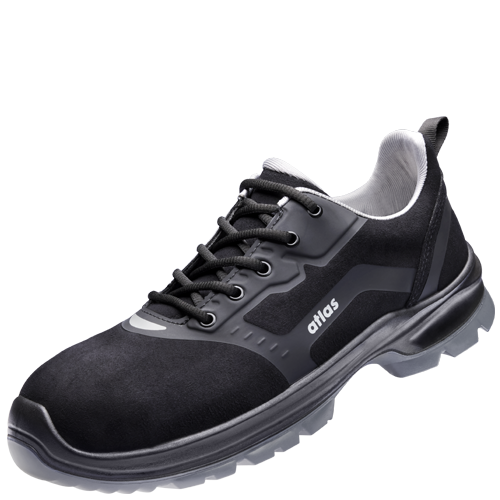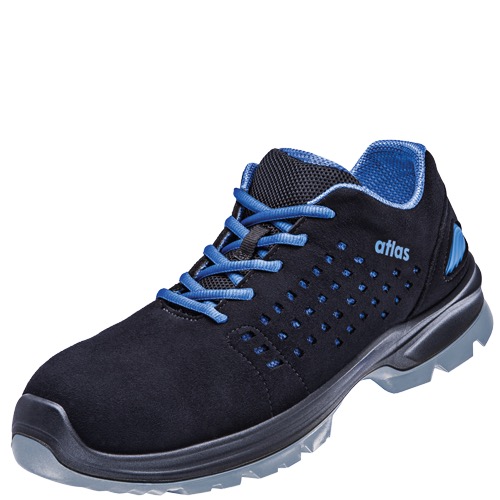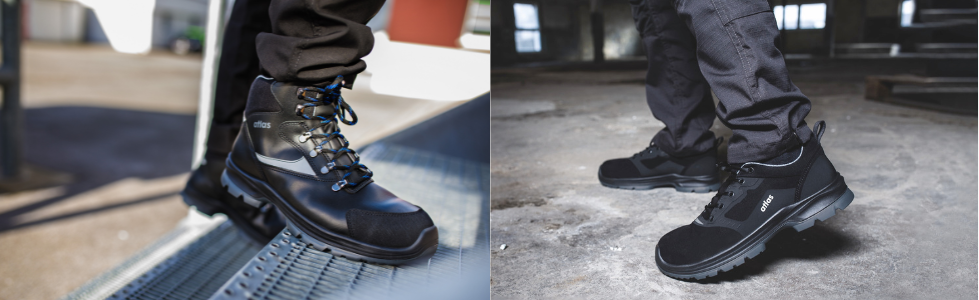
Overview of safety classes S1–S7
Your guide to the ideal ATLAS safety footwear
Safety footwear is essential for protecting your feet from injury at work. Choosing the right pair of safety shoes depends on the specific hazards and requirements of your workplace. This overview explains the various safety classes (S1 to S7) and shows you which ATLAS products offer the appropriate protective features. Find the ideal ATLAS safety footwear for your needs now!
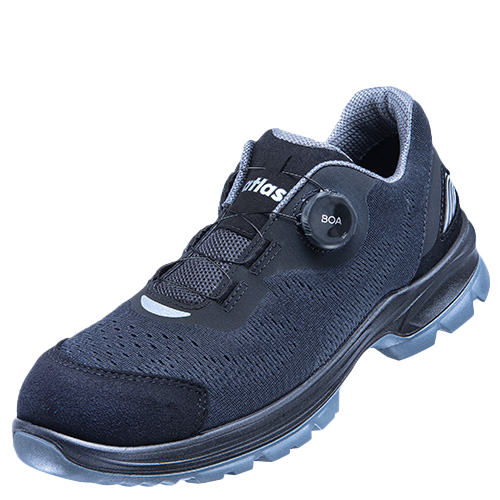
Safety class S1-
Basic protection for dry working environments
Features:
- Toe cap: Protects your toes from impact and pressure
- Closed heel area with energy absorption (E): Reduces strain on the joints
- Antistatic properties (A): Prevents electrostatic build-up
- Fuel-resistant sole (FO): Resistant to oil and petrol
Areas of use:
Ideal for dry working environments such as warehouses, workshops, assembly areas and indoor areas without any particular risks from wet conditions or sharp objects.
You can find further information on safety class S1 in our ATLAS guide.

Safety classes S1P, S1PL & S1PS –
Protection against punctures and impacts
Features:
- Optimised slip resistance (SR): Secure grip on slippery and oily floors (replaces the old designations SRA/SRB/SRC).
- Closed heel area: For increased stability.
- Antistatic properties (A): Protection against electrostatic build-up.
- Energy absorption in the heel area (E): Reduces strain on the joints.
- Fuel resistance of the sole (FO): Optional protection in environments with high levels of oil and fuel.
- Graded puncture protection: Prevents sharp objects (e.g. nails, glass) from penetrating the sole:
- S1P: Classic steel midsole (tested with a 4.5 mm nail).
- S1PL: Metal-free textile protection (Large) – flexible and lightweight (tested with a 4.5 mm nail).
- S1PS: Highest level of metal-free textile protection (Small) – maximum resistance to particularly fine, sharp objects (tested with a 3.0 mm nail).
Areas of use:
Work environments where there is a risk of injury from loose, pointed or sharp objects. Typical examples include joinery workshops, general workshops, interior fit-out sites and areas where work involves nails, screws or glass.
Further information on the safety classes S1P, S1PL and S1PS can be found in our ATLAS guide.